On 17 October 2026, a researcher reported that eight intermediate certificates belonging to eMudhra, an Indian certificate authority, had private keys that could be guessed. One of them was the number 4.
Six of the eight were intermediates for TLS, trusted by every major browser. Whoever held one of their keys could issue a website certificate for any domain and have it accepted.
Below, I separate three kinds of statement: what I checked in the certificates myself, what eMudhra reported about its own systems, and what a client would have accepted.
Two roots, one key
The intermediate with key 4 is EM OV TLS CA - G3C. Two roots signed a certificate for it:
| Root the client already trusts | What that root signed |
|---|---|
eMudhra’s emSign Root TLS CA - G3 |
An intermediate certificate for EM OV TLS CA - G3C, issued 30 April 2025 |
Sectigo’s AAA Certificate Services |
A second intermediate certificate for EM OV TLS CA - G3C, issued 14 May 2025 |
The second row is a cross-signature. eMudhra signed one intermediate certificate. Sectigo signed the other. I downloaded both from crt.sh and compared them: they contain the same public key. The matching private key, 4, could therefore issue website certificates that chained through either root. Sectigo’s certificate gave it a second trust path, to every client that trusts AAA Certificate Services.
Both certificates allow TLS server authentication and neither has name constraints. A CA certificate can restrict which domains it may issue for; this one did not. For the six TLS intermediates, that means any domain.
Why a script was handling the keys
The rest of this section is eMudhra’s account, from its incident report on Mozilla’s bug tracker.
Root programs changed their policies on 15 June 2025 to require dedicated TLS issuing CAs, and eMudhra wanted its new intermediates cross-signed by Sectigo before that date. So the keys had to exist by the end of May.
The B and C series were meant to run from eMudhra’s US and EU facilities, on HSMs from a different vendor than the ones in its ceremony room. On 30 April 2025 it generated the key pairs in one key ceremony, then rehearsed the transfer it planned to make later.
eMudhra says the original key pairs were generated correctly. The fault was in the rehearsal. A host-side script read each key back and re-created it as a new object, and for the eight ECDSA P-384 keys, one line truncated the private value to its leading byte. The re-created object held a different, tiny key:
4 56 66 115 155 156 230 237The original object and the re-created one had almost identical labels. The re-created one was used to produce the certificate signing request, and that is the key that was certified. Nothing compared the certified public key with the key the ceremony had generated.
The warning in June 2025
Sectigo first emailed eMudhra about it on 3 June 2025. The message was quarantined. On 5 June, Sectigo reported on Mozilla’s bug tracker that six eMudhra certificate revocation lists (CRLs) had invalid signatures. They were the revocation lists of the six TLS intermediates in this incident.
According to eMudhra’s 2026 report, the CRLs had been signed with the original keys, which did not match the certificates, because the certificates had been issued over the re-created objects. eMudhra fixed the symptom by re-signing the lists with the objects that matched the certificates, the weak keys. The bug was closed.
So in June 2025 eMudhra had two different keys for each of six issuers, and the mismatch was visible from outside. Its own report says the fix “did not reach the underlying cause.” The weak keys stayed in service for another sixteen months.
Recovering a key
With at most 255 candidates, recovery is a loop: derive the public key for each value and compare it with the one in the certificate.
for (let d = 1; d < 256; d++) {
  const priv = Buffer.alloc(48);   // a 384-bit number...
  priv[47] = d;                    // ...whose value is just d
  const guess = createECDH('secp384r1');
  guess.setPrivateKey(priv);
  if (guess.getPublicKey('hex') === target) { /* found it */ }
}
I ran it against the EM OV TLS CA - G3C certificate from crt.sh:
subject: C=US, O=eMudhra Inc, CN=EM OV TLS CA - G3C
issuer:  C=IN, O=eMudhra Technologies Limited, CN=emSign Root TLS CA - G3
curve:   P-384
private key found: 4  (after 4 guesses, 2.6 ms)
The key came out on the fourth guess, in 2.6 milliseconds.
The whole script, using only Node’s standard library
// Try every private key from 1 to 255 against a certificate's public key.
import { X509Certificate, createECDH } from 'node:crypto';
import { readFileSync } from 'node:fs';

const cert = new X509Certificate(readFileSync(process.argv[2]));
const { crv, x, y } = cert.publicKey.export({ format: 'jwk' });
const target = '04' + Buffer.from(x, 'base64url').toString('hex')
                     + Buffer.from(y, 'base64url').toString('hex');

console.log('subject:', cert.subject.replaceAll('\n', ', '));
console.log('issuer: ', cert.issuer.replaceAll('\n', ', '));
console.log('curve:  ', crv);

const start = performance.now();
for (let d = 1; d < 256; d++) {
  const priv = Buffer.alloc(48);   // a 384-bit number...
  priv[47] = d;                    // ...whose value is just d
  const guess = createECDH('secp384r1');
  guess.setPrivateKey(priv);
  if (guess.getPublicKey('hex') === target) {
    const ms = (performance.now() - start).toFixed(1);
    console.log(`private key found: ${d}  (after ${d} guesses, ${ms} ms)`);
    process.exit(0);
  }
}
console.log('not found in 1..255');
What the keys allowed, and what they did not
What a client would have accepted. With a TLS intermediate’s key, an attacker could sign a certificate for any domain, and clients trusting either root would accept it. Combined with a position to intercept traffic, on a shared network or through a compromised router, that is a man-in-the-middle on HTTPS with no warning. The two code-signing intermediates could have issued code-signing certificates, whose holders’ keys would then sign software.
What eMudhra reports it issued. The eight ECDSA intermediates issued no end-entity certificates. No real website was using these keys. The danger was entirely in what someone else could sign with them. eMudhra says it found no evidence of misuse, but because the keys could be recovered from the public certificates, that cannot be proved.
What the keys could not do. They could not decrypt past traffic. The intermediate’s private key signs certificates. During a TLS 1.3 connection, the server signs handshake data with its own private key, and the traffic keys come from an ephemeral ECDHE exchange. Recovering the intermediate’s key alone does not reveal the traffic keys of any earlier connection. The risk was to connections made while an attacker could intercept them.
The response
| Date (2026) | What happened |
|---|---|
| 17 Oct | The weak keys are reported to Apple, Google, Microsoft, Mozilla and eMudhra. Chrome and Firefox start blocking the eight certificates the same day. |
| 18 Oct | eMudhra revokes the eight intermediates. |
| 19 Oct | Sectigo revokes its cross-signatures. |
| 20 Oct | Mozilla discloses the incident and ships an update that removes eMudhra’s root. |
| 26 Oct | Microsoft ships an out-of-band Windows update. |
| 7 Nov | eMudhra revokes the eight RSA intermediates from the same ceremony. Their keys were not shown to be weak, but they had been handled in host memory, against eMudhra’s own practice statement. |
eMudhra has since decided to leave the publicly trusted TLS business.
Who is still exposed
Browsers fixed this within days because they update themselves and ship their own revocation lists. Devices whose trusted roots are compiled into firmware do not. They keep trusting the chain until the vendor ships an update and the device installs it.
The Register reported one case in November. Daniel Vrátil’s 2022 Samsung TV still trusted the chain. He used a leaked key to issue a certificate for Samsung’s ad domains, pointed those domains at a server on his home network through his router, and the TV accepted the server as Samsung. He used it to replace home-screen ads with his own photos. It shows one device that still trusted the chain accepting a certificate made with a leaked key, for the domains he tested.
What I take from it
- Check the certified key against the generated key. The fault was not that a key looked small. It was that the key certified was not the key the ceremony generated. Comparing the public key in the signing request with the HSM’s record of the generated key would have caught all eight.
- Treat a signature mismatch as a key problem. The June 2025 CRL failure was the same defect seen from outside. Fixing the signature without asking why two keys existed left it in place.
- An unconstrained TLS intermediate can issue for any domain. One CA’s key-handling bug becomes every site’s problem unless the intermediate is constrained.
- Cross-signing spreads failure as well as trust. The certificate that gave eMudhra’s intermediates a second trust path gave the weak keys the same path.
- Revocation only reaches clients that update. The long tail is TVs, routers and other embedded devices with frozen trust stores.
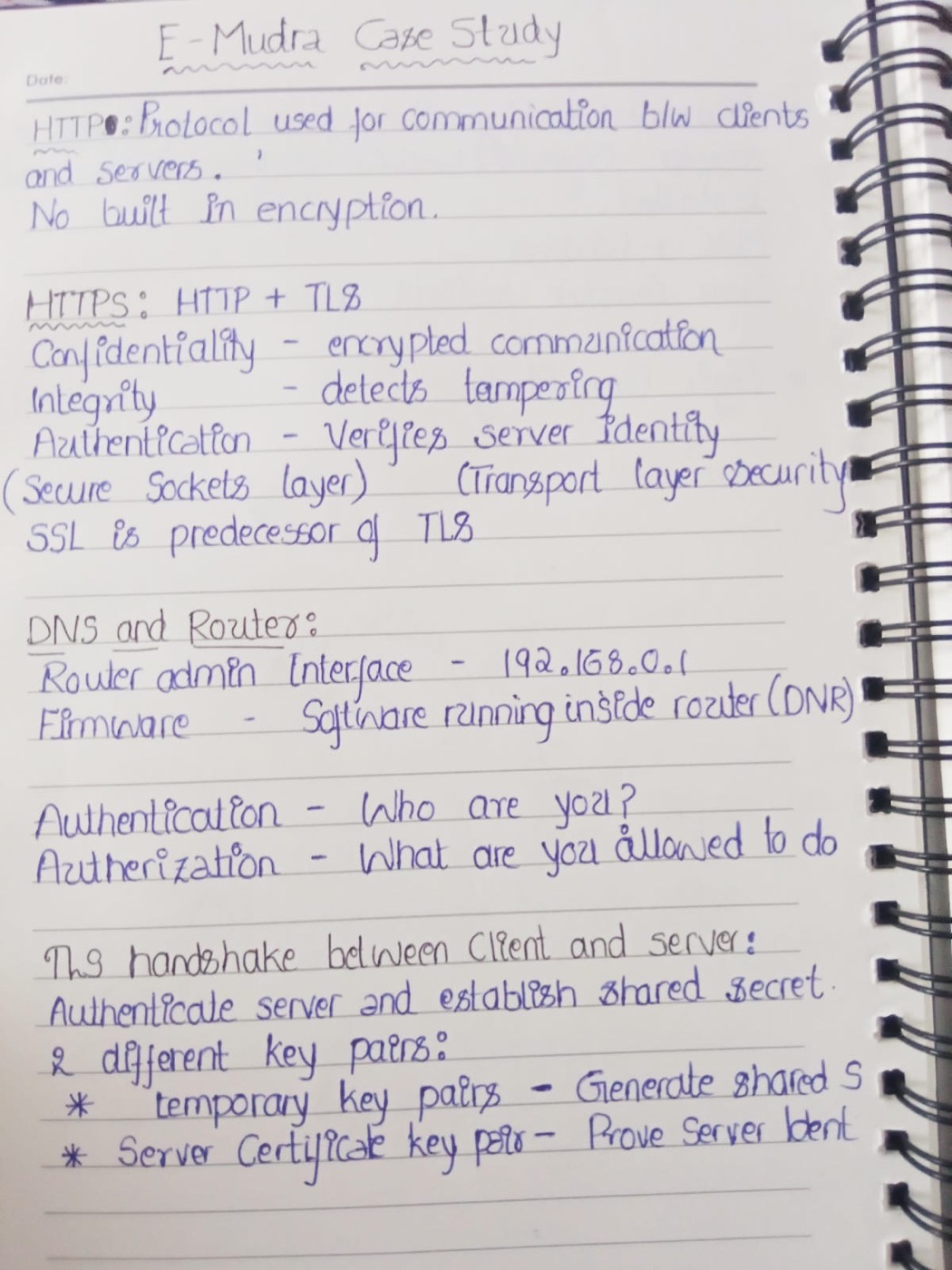
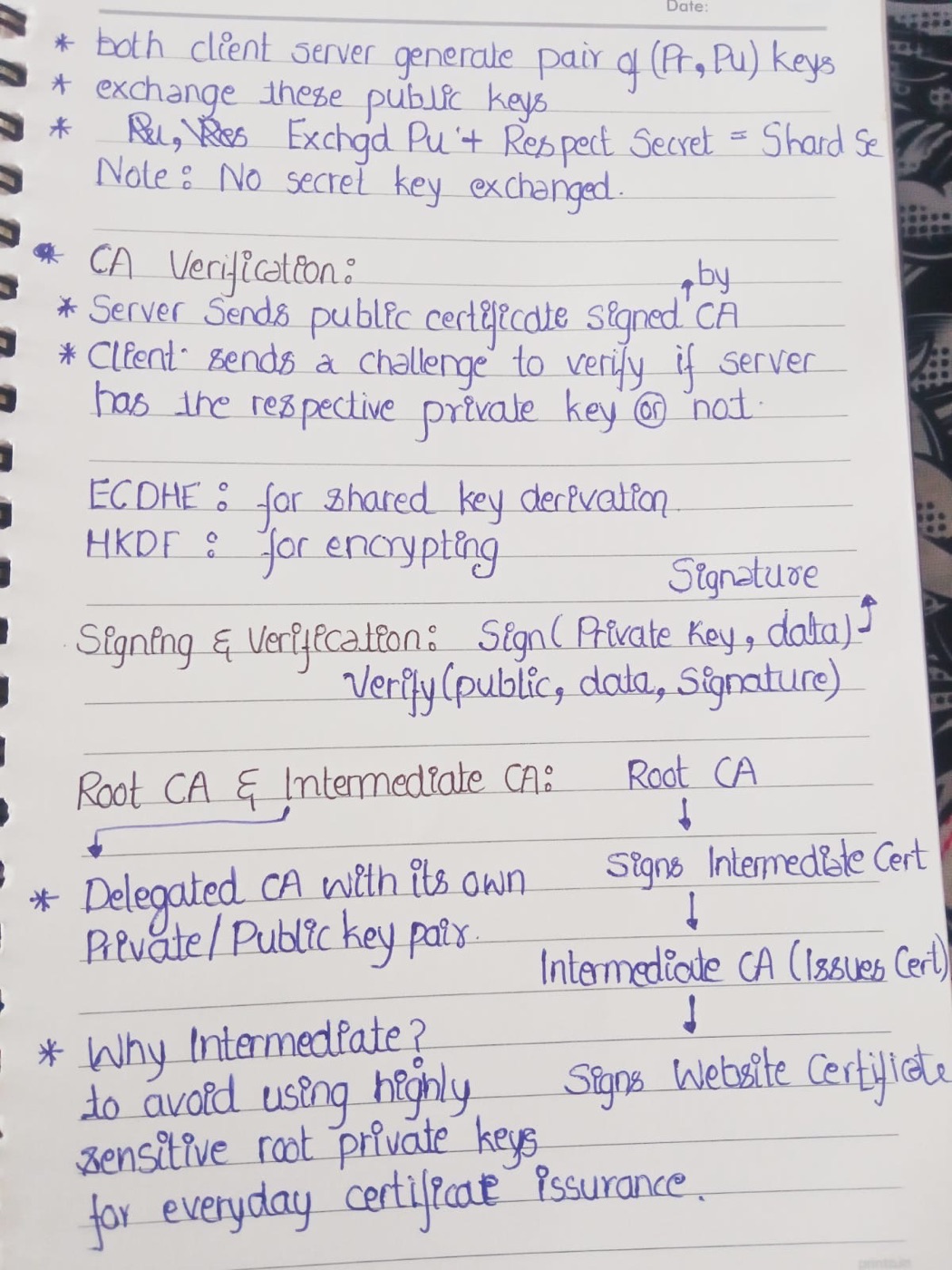
Open my handwritten notes 2 pages
Written while I was reading up on this. Where they differ from the article, the article is the corrected version.
Questions or corrections? Message me on LinkedIn.